Is web design actually hard… or are we just pretending it should be easy?
Let’s get one thing straight.
Web design isn’t hard because it’s broken.
It’s hard because it’s supposed to be.
Somewhere along the way, people started believing that building a high-performing website should feel like dragging a few boxes around a screen, slapping on a stock image, and calling it a day. And when that didn’t work? Suddenly, web design became “confusing”, “overcomplicated”, or everyone’s favourite — “overpriced”.
But here’s the uncomfortable truth:
you’re not supposed to be good at everything.
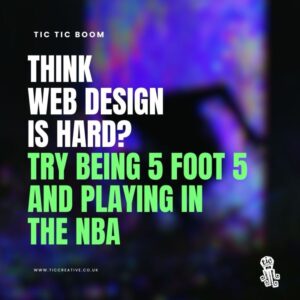
You wouldn’t expect to step onto an NBA court at 5 foot 5 and dominate. You wouldn’t casually wake up one morning and decide to practise law without years of training. Yet somehow, when it comes to web design — a discipline that blends psychology, engineering, design, marketing, performance, and strategy — people expect mastery in a weekend.
It doesn’t work like that.
Web design is hard because it sits at the intersection of everything that matters in business: attention, trust, clarity, and conversion. And if you get it wrong, you don’t just get an ugly website… you get a business that quietly loses money.
So no — it’s not easy.
And honestly, it shouldn’t be.
The Lie We’ve All Been Sold
The biggest problem isn’t web design.
It’s the narrative around it.
“Build your own website in minutes.”
“No experience needed.”
“Just drag and drop.”
It sounds brilliant. Until it doesn’t work.
Because what those tools don’t tell you is this:
- Where should the user look first?
- What message actually converts?
- How do you structure content for intent?
- What builds trust in 3 seconds?
- What makes someone click… or leave?
That’s not drag-and-drop.
That’s psychology.
And psychology doesn’t come with a template.
Web Design Isn’t Design — It’s Decision Making
Here’s where most people get it wrong.
They think web design is about colours, fonts, and “making it look nice”.
It’s not.
It’s about decisions.
- What do we show first?
- What do we hide?
- What’s the one message that matters?
- What action do we want?
Every page is a funnel.
Every click is a choice.
And if you don’t understand the user — properly understand them — you’re just guessing.
That’s why most DIY websites fail quietly.
They look fine.
But they don’t work.
“I Can’t Even Wire a Plug Anymore”
Let’s be honest for a second.
There was a time when people wired plugs, fixed engines, and built things with their hands. Now?
Most of us would stare at a plug like it’s a bomb.
And that’s okay.
Because the world moved on.
Specialisation took over.
We all have skills.
We all have blind spots.
And the smartest people in business know this:
You don’t need to know everything. You need to know who to call.
The Entitlement Trap
There’s a dangerous mindset creeping into business.
The idea that things should be easy.
They shouldn’t.
Anything valuable — anything that moves the needle — requires effort, experience, and yes… a bit of pain.
As Matthew McConaughey put it:
“Life is not easy. It is not. Don’t try to make it that way. Life’s not fair. It never was. It isn’t now and it won’t ever be. Do not fall into the trap, the entitlement trap of feeling like you’re a victim. You are not.
Get over it and get on with it. And yes, most things are more rewarding when you break a sweat to get ’em.”
That applies perfectly to web design.
You can:
- Learn it (properly, over years)
- Or hire someone who already has
But what you can’t do…
is shortcut your way to results.
Why It’s Actually Worth It
Here’s the twist.
The reason web design is hard…
is the same reason it’s powerful.
A great website can:
- Turn cold traffic into paying customers
- Build trust in seconds
- Position you above competitors instantly
- Work for you 24/7 without complaining
But only if it’s done right.
That’s the trade-off.
Easy websites don’t perform.
Performing websites aren’t easy.
Pick one.
Case Study — The “Nice Looking” Website That Made Nothing
A business owner comes in.
They’ve built their own site using a popular builder.
It looks… decent.
Clean layout. Nice colours. Even a fancy animation or two.
But there’s a problem.
No enquiries.
No conversions.
Nothing.
So we dig deeper.
Here’s what we find:
- No clear headline — users don’t know what they do
- No defined audience — trying to talk to everyone
- No call to action — nowhere to go next
- Navigation cluttered — too many choices
- Mobile experience broken — where most traffic lives
The result?
People land.
People scroll.
People leave.
Now contrast that with a rebuild:
- One clear message above the fold
- Defined user journey
- Strategic CTA placement
- Simplified navigation
- Mobile-first design
Same business.
Same service.
Completely different outcome.
That’s web design.
Not decoration.
Performance.
The Real Skill Isn’t Building — It’s Knowing
Anyone can build a website.
That’s not the skill anymore.
The skill is knowing:
- What matters
- What doesn’t
- What converts
- What kills conversions
That comes from:
- Experience
- Failure
- Testing
- Obsession with results
Not templates.
“Your website isn’t judged by how it looks. It’s judged by what it makes you.”
So What Should You Do?
You’ve got two options.
Option 1 — Learn It Properly
Spend years understanding:
- UX
- SEO
- Conversion psychology
- Performance
- Development
Earn it.
Option 2 — Call the Guy
Find someone who already has.
Not someone who:
- Just makes things “look nice”
- Relies on templates
- Avoids the hard questions
But someone who:
- Understands your business
- Knows your audience
- Builds for results
Web design isn’t hard because it’s broken.
It’s hard because it sits at the centre of everything that makes a business succeed online.
And like anything worth having…
You’ve got to work for it.
Or work with someone who already has.
If your website looks fine but does nothing…
You already know what to do.
Go call the guy.