“Chris, Chris, can you hear me? I’m Julie, a paramedic. Can you hear my voice?”
Maybe a strange way to start this story, but it’s a memory I often think about when discussing the continuing AI takeover in the creative arts.
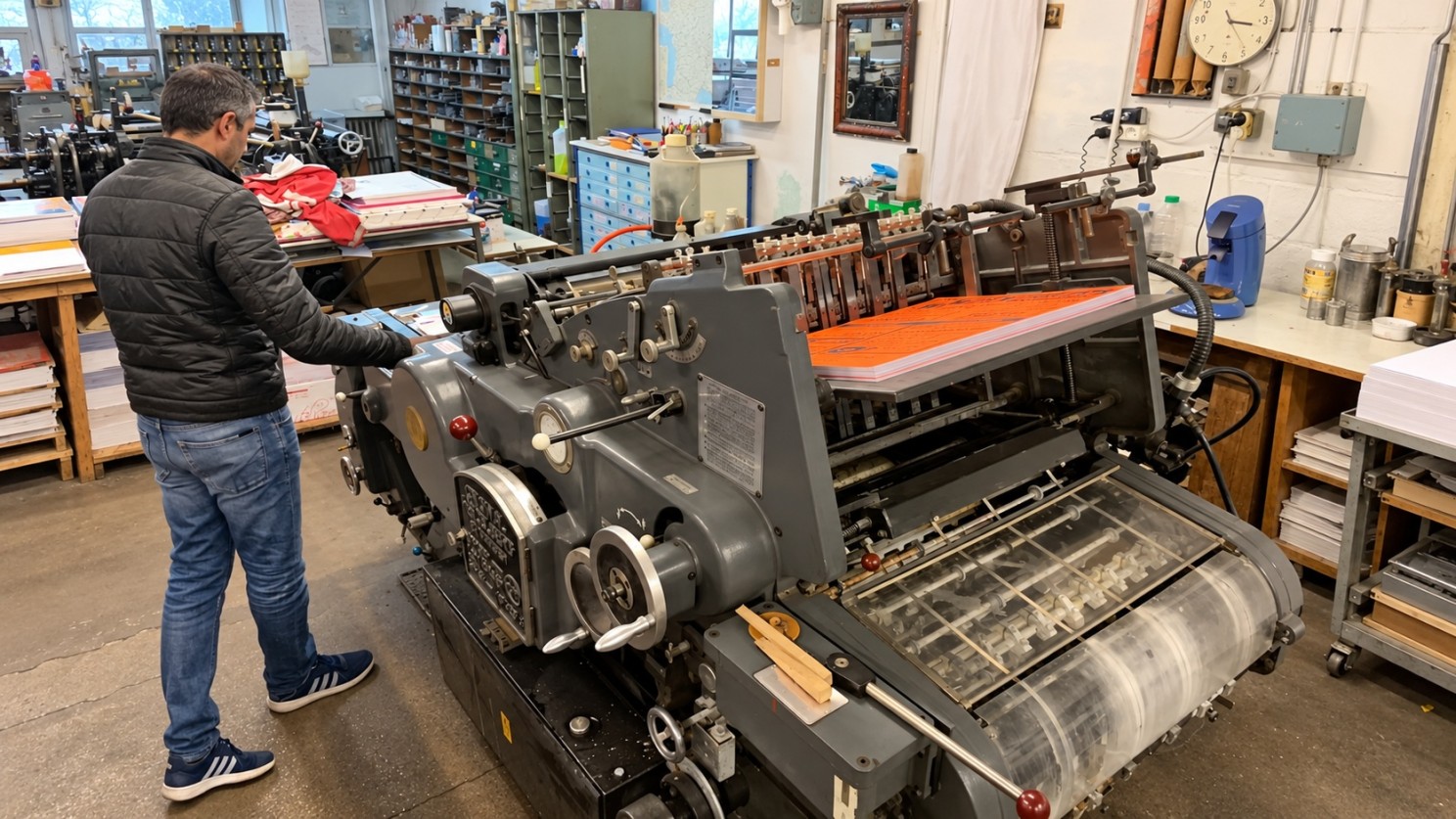
In 1992, a colleague called an ambulance after I collapsed into my Heidelberg press, banged my head and hit the floor like a stunned cow.
Exhaustion had got the better of me. Nine weeks of working from 6am to 8.30pm, with double shifts at weekends, had taken their toll. No amount of Pro Plus and caffeine was going to negotiate my way out of that one.
Why am I telling you this? What’s an apprentice printer lying on the floor got to do with artificial intelligence?
Well, quite a lot, actually.
But first, collapsing at work isn’t a professional development strategy. The ambulance was a fairly clear indication that I’d overdone it. It’s what I was so desperate to learn before hitting the floor that matters here.
I was a sponge. I wanted to know everything about my craft.
I took overtime in platemaking, the camera room, typesetting, the bindery and even the warehouse. If there was something happening that I didn’t understand, I wanted someone to explain it. Preferably while I stood there asking a gazillion questions.
OK, I also liked the extra money. On £76 a week, overtime had a certain seductive quality. And did I mention I won Apprentice of the Year? I probably should. It helps balance out the stunned cow bit.
Across that three-year apprenticeship, I learnt how a job moved through the business. How a decision in one department could create a problem in another. How something that looked perfectly acceptable at one stage could become an expensive mistake further down the line.
I learnt through repetition, corrections, questions & wonder. Through doing ordinary jobs carefully enough to understand why they mattered.
The grunt work.
“Greatness comes from humble beginnings; it comes from grunt work. It means you’re the least important person in the room—until you change that with results.”
Ryan Holiday (Ego Is the Enemy):
Thirty-six years into graphic design, I can still see how much of my judgement grew out of those experiences.
Which is why I worry about young creatives being encouraged to hand all of that over to AI.
I understand the attraction. You have an idea, type a prompt and something impressive appears. Seconds later, there are six alternatives.
Wonderful. Except I keep wondering what happens to the learning between the idea and the result. The awkward attempts. The errors. The afternoon spent trying to make a layout work, (Did i mention I once posted on here about the 6 days I went down the rabbit hole to learn a new style for a client, no washing, eating, dressing or leaving the house) only to discover that the element you’ve been desperately protecting is the thing ruining it.
There’s an education in that afternoon.
You make a decision and see its consequences. You correct something and discover what improves. You try the same approach elsewhere and find it doesn’t work there.
Gradually, you build a feel for the work.
Your hands learn the tools. Your eye recognises an imbalance. You spot a problem before you can quite explain it, then draw on experience to work out what needs changing.
That’s the muscle memory I’m talking about.
If AI supplies the answers before you’ve properly wrestled with the questions, where do you develop it?
You might recognise an image you like. But can you explain why it works? Can you identify what’s wrong with the next one? Can you make a precise correction when the client asks for something beyond “another version, please”?
Or do you keep prompting until something agreeable turns up?
There’s plenty of room for curiosity about these tools, and experienced designers have plenty to learn too. But when I assess what it produces, I’m drawing on decades of making, checking, correcting and occasionally wondering what on earth were they thinking.
Someone entering the industry hasn’t had those decades. We need to give them opportunities to build that judgement, even as we give them faster tools.
And then there’s the wonder.
I wanted to visit those departments because I was fascinated by what happened in them. Watching an idea become a physical thing was exciting. Understanding another part of the process made me want to discover the next. yes I got to spend weeks in every department but I also wanted to push every technology and learn from the Union man, the Typography specialist and even the letterpress tool maker that was a dying technology, buy hey look its made a comback.
That curiosity deserves room to grow. If everything becomes an instruction followed by an instant result, it’s easy to spend less time exploring how things happen. Yet that exploration can lead you somewhere far more interesting than the thing you originally asked for.
You can automate the task. You still have to find a way to acquire the understanding.
Young creatives deserve good teaching, useful feedback and time to practise. They deserve to make errors while someone is there to help them understand the consequences.
They also deserve to discover the satisfaction of finally getting something right because they worked out how. I lover to question results, choices and editions.
- Why did you choose that font?
- What was your understanding of the brief?
- Are you 100% happy with this?
- How could you improve this?
- If you had the ability to make this better, would you go learn ability
There are many more, many many more, but each reflection grows a career and a confidence to be creative and brave.
So use AI. Experiment. Ask questions. But give yourself some work that requires patience, repetition and your own decisions.
Get into the grunt. Leave room for wonder.
And if the Heidelberg starts looking like somewhere comfortable to rest your head, go home.
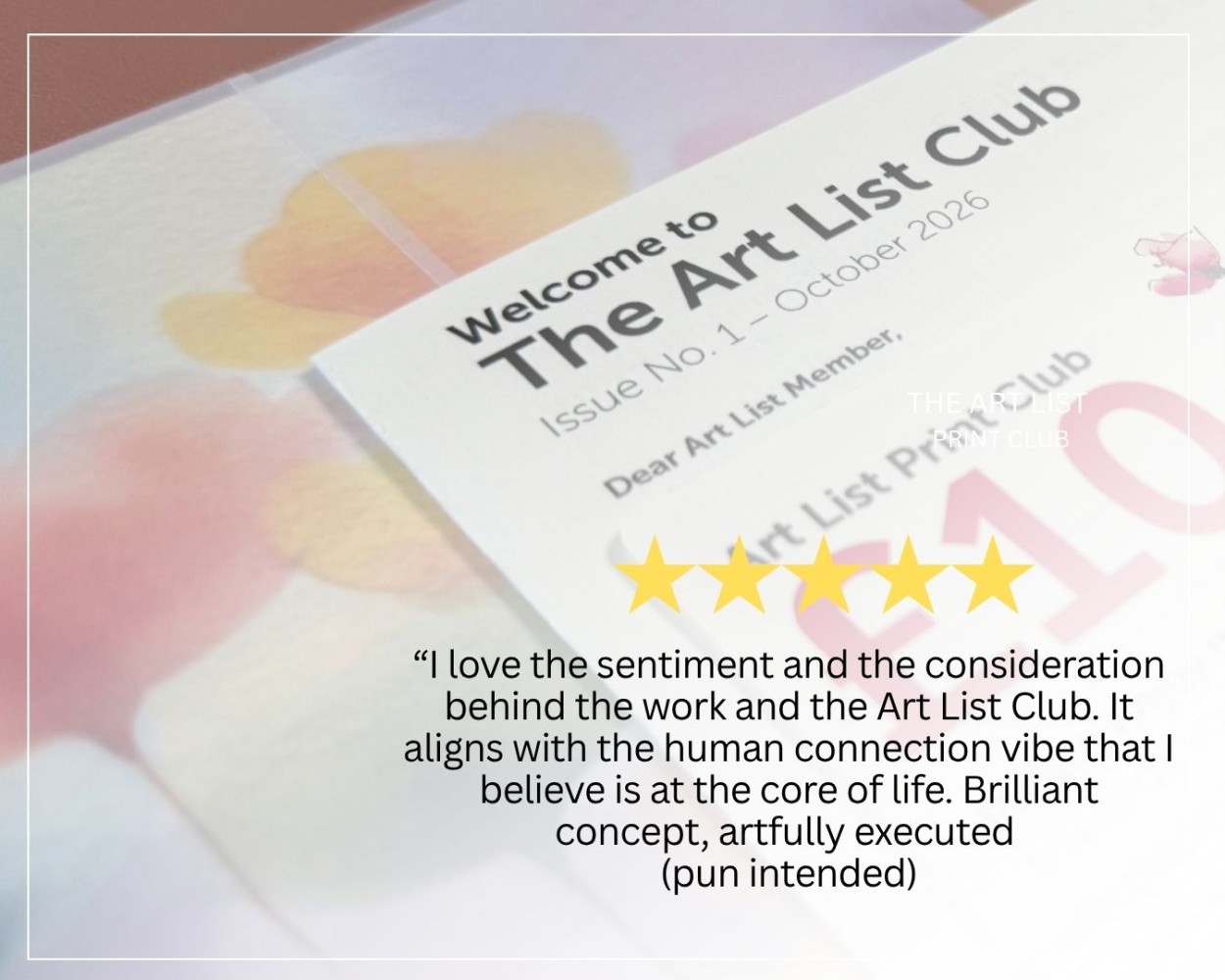
Did you know I started a print club through the mail?
Learn more here: – https://theartlist.co.uk/product/monthly-art-subscription/